 +918369112120

Haji Ali Dargah History, Timings & Travel Guide Mumbai
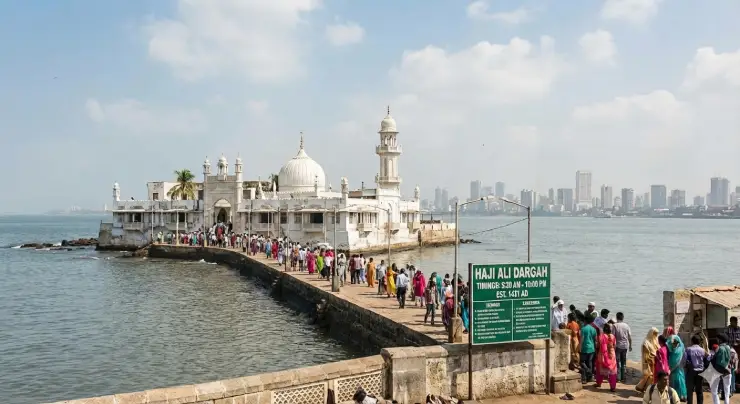
The Haji Ali Dargah is one of Mumbai’s most iconic religious and architectural landmarks. Located on a small islet in the Arabian Sea and connected to the mainland by a narrow causeway, the dargah is a symbol of faith, unity, and devotion. People from all religions visit this sacred place, making it a true representation of Mumbai’s inclusive spirit.
Who Was Haji Ali?
Haji Ali Dargah is dedicated to Sayed Peer Haji Ali Shah Bukhari, a wealthy Muslim merchant and Sufi saint from Bukhara (present-day Uzbekistan). Born in the 15th century, Haji Ali Shah Bukhari renounced his material wealth after performing the Hajj pilgrimage to Mecca and chose a spiritual path devoted to serving humanity and spreading the message of peace.
Origin of Haji Ali Dargah
According to historical accounts, Haji Ali Shah Bukhari travelled extensively across India preaching Sufism. During one of his journeys, he settled in Mumbai (then Bombay). After his death in 1431 AD, his disciples built a tomb (dargah) on a small island off the Worli coast, as per his wish.
A popular legend associated with the dargah says that Haji Ali’s coffin miraculously floated back to the Arabian Sea, and the exact spot where it stopped became the site of the dargah.
Construction and Architectural History
The dargah was constructed in Indo-Islamic architectural style, combining traditional Islamic elements with local Indian craftsmanship.
Key Architectural Features:
- A white marble structure visible from far away
- Central tomb of Haji Ali Shah Bukhari
- A mosque within the complex
- A long stone causeway (around 500 meters) connecting the dargah to the mainland
- Domes and minarets reflecting classic Islamic design
Over centuries, the structure has undergone renovations to protect it from sea erosion and natural wear.
Religious and Cultural Significance
Haji Ali Dargah holds deep spiritual importance for devotees who believe that prayers made here are fulfilled. The dargah is visited by:
- Muslims seeking blessings
- Hindus offering prayers
- Tourists and spiritual seekers from around the world
The shrine promotes the Sufi philosophy of love, compassion, and equality beyond religious boundaries.
Historical Challenges and Restoration
Due to its location in the sea, Haji Ali Dargah has faced several challenges:
- Sea erosion and weather damage over centuries
- In 2017, a major restoration project was undertaken to strengthen the structure and preserve its heritage value
- Advanced technology and corrosion-resistant materials were used to ensure long-term durability
The restoration helped protect this historic monument for future generations.
Women’s Entry Movement (Historical Milestone)
In 2016, the Haji Ali Dargah Trust lifted a long-standing ban on women entering the inner sanctum after a landmark court decision. This became a significant moment in the history of religious equality in India and added a modern chapter to the dargah’s long legacy.
Best Time to Visit Haji Ali Dargah
- Low tide is the best time, as the causeway remains accessible
- Early mornings and evenings offer a peaceful experience
- Avoid monsoon season when the causeway is submerged
Why Haji Ali Dargah Remains Important Today
The history of Haji Ali Dargah is not just about a monument—it is about faith, unity, resilience, and spiritual harmony. Standing strong against the waves of the Arabian Sea for over 500 years, the dargah continues to inspire millions with its message of devotion and humanity.
Final Thoughts
The history of Haji Ali Dargah reflects Mumbai’s soul—diverse, spiritual, and inclusive. From the life of a Sufi saint to a sea-facing shrine admired across the world, Haji Ali Dargah remains one of the most powerful symbols of faith in India.
FAQs:
Q1. Where is Haji Ali Dargah located?
A. Haji Ali Dargah is located off the coast of Worli, South Mumbai, on a small islet in the Arabian Sea. It is connected to the mainland by a narrow causeway that is accessible only during low tide.
Q2. Who built Haji Ali Dargah?
A. Haji Ali Dargah was built by the followers of Sayed Peer Haji Ali Shah Bukhari, a Sufi saint, after his death in 1431 AD. The dargah houses his tomb and has been a major spiritual site for centuries.
Q3. Why is Haji Ali Dargah famous?
A. Haji Ali Dargah is famous for:
- Its unique location in the middle of the sea
- Strong spiritual significance across religions
- Indo-Islamic architecture
- Belief that wishes made here are fulfilled
- Being one of Mumbai’s most iconic landmarks
Q4. Is Haji Ali Dargah open to people of all religions?
A. Yes. Haji Ali Dargah welcomes people of all religions, castes, and backgrounds. It is a symbol of religious harmony and unity in Mumbai.
Q5. Can women enter Haji Ali Dargah?
A. Yes. Women are allowed to enter Haji Ali Dargah. In 2016, the trust lifted restrictions on women entering the inner sanctum following a court ruling. Today, both men and women can offer prayers.
Q6. What are the opening and closing timings of Haji Ali Dargah?
- Opening Time: 5:30 AM
- Closing Time: 10:00 PM
A. Timings may vary slightly on special occasions, Fridays, and during festivals.
Q7. Is there any entry fee for Haji Ali Dargah?
A. No. Entry to Haji Ali Dargah is completely free. However, donations are optional and voluntary.
Q8. What is the best time to visit Haji Ali Dargah?
A. The best time to visit is:
- During low tide, when the causeway is fully accessible
- Early morning or evening for a peaceful experience
- October to March for pleasant weather
Avoid visiting during monsoon season, as the causeway may be submerged.
Q9. How long does it take to visit Haji Ali Dargah?
A. A complete visit usually takes 45 minutes to 1.5 hours, including walking along the causeway and offering prayers.
Q10. Is photography allowed at Haji Ali Dargah?
A. Photography is allowed outside and around the complex, but photography inside the sanctum area may be restricted. Visitors are advised to respect religious guidelines.
Q11. How do you reach Haji Ali Dargah?
A. You can reach Haji Ali Dargah by:
- Taxi or cab to Worli
- BEST bus services
- Mumbai local train (nearest stations: Mahalaxmi or Lower Parel, followed by a short drive)
Many Mumbai Darshan tours include Haji Ali as a major stop.
Q12. What should visitors wear at Haji Ali Dargah?
A. Visitors should wear modest and respectful clothing:
- Covered shoulders and knees recommended
- Footwear must be removed before entering
- Head coverings may be required inside prayer areas
Q13. Is Haji Ali Dargah safe for tourists?
A. Yes. Haji Ali Dargah is generally safe for tourists. Security personnel and crowd control measures are present, especially during peak hours and festivals.
Q14. Are food stalls available near Haji Ali Dargah?
A. Yes. There are several local food stalls and eateries near the entrance offering snacks, refreshments, and traditional street food.
Q15. What makes Haji Ali Dargah unique among Indian religious sites?
A. Haji Ali Dargah is unique because:
- It is built on an islet in the sea
- It represents Sufi spiritual philosophy
- It attracts devotees from all faiths
- It blends history, architecture, and devotion